

Dr Hasan Shaheed
PhD (Sheffield), PGCAP (London), SFHEA, MIEEE, CEng, MIET, NTF
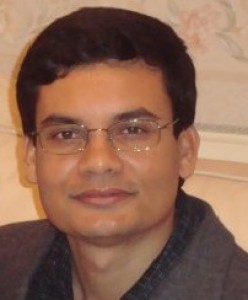
Reader in Robotics and Control
Deputy Chair- University Academic Misconduct Panel
Academic Liaison: Institution of Mechanical Engineers (IMechE)
Engineering 316, Mile End

| Feedback/ support hours: |
Tuesday: 2 pm- 3 pm (in person) and 3 pm- 4 pm (online) |
| Expertise: |
Design, model developments, control and optimisation of autonomous, robotics and renewable energy systems using traditional, artificial intelligence (AI) and machine learning (ML) approaches. Application areas include i) Aerial/ Solar Aerial robots for inspection/monitoring, ii) Medical Robotics: Capsule robots for GI tract inspection, Surgical robotic retractor, iii) Assistive Technologies: prosthetics, elderly care robots, iv) Remote inspection/handling robots, v) Renewable Energy powered autonomous and robotic systems. AI/ML approaches include deep learning, reinforcement learning neural networks, fuzzy logic, and biologically inspired optimisation techniques: GAs, Whale Optimisation, Grey Wolf Optimisation, etc. |
| Research Centre: | Intelligent Transport |
| Affiliations: |
National Teaching Fellow Senior Fellow, Higher Education Academy CEng (Chartered Engineer) Member, The Institution of Engineering and Technology, MIET Member, The Institute of Electrical and Electronics Engineers, MIEEE |
Brief Biography
Dr Shaheed is a Reader in the School of Engineering and Materials Science at Queen Mary University of London. He received his PhD in Artificial Intelligence (AI)â??based modelling and control of flexible robotic manipulator systems from the Department of Automatic Control and Systems Engineering, University of Sheffield, UK.
He has published over 100 peer-reviewed articles in leading international journals and conference proceedings. He has supervised 15 PhD students to successful completion, supported by UK research councils, industry, government funding from several countries, and self-funded routes. He has also supervised Postdoctoral Research Associates, Research Associates, and visiting research fellows.
Dr Shaheed's research interests include the design, modelling, control, and optimisation of autonomous, robotic, and renewable energy systems, using both conventional approaches and advanced Artificial Intelligence (AI) and Machine Learning (ML) techniques. He has developed several novel AI-integrated control algorithms with applications in robotic and autonomous systems.
He led the team that developed the world's first solar-powered helicopter ("Solarcopter"), capable of operating solely on solar energy without batteries. This work received extensive national and international media coverage, including Discovery Channel's Daily Planet, Fast Company, Designboom, Gizmag, The Daily Star, and The Independent, and was awarded the National Physical Laboratory Prize at the Industrial Liaison Forum (ILF). He later developed the world's smallest multirotor solar aerial vehicle. In recognition of his contributions to renewable-energy-powered autonomous and robotic systems, he was invited by the Eni Scientific Secretariat to submit an application for the Eni Award.
Dr Shaheed invented a novel locomotion system for a capsule robot compatible with the human digestive system (PCT/EP2021/075342; 2022/058354/A1; US 2024/0023794/A), with potential applications in gastrointestinal (GI) tract screening. This research was undertaken in collaboration with Mr Mo Thaha, Consultant Colorectal Surgeon at Queen Mary University of London (QMUL). In recognition of the commercial and translational potential of this work and related research outputs, Dr Shaheed has received multiple awards from Queen Mary Innovation (QMI), including the Innovation Award, Proof of Concept Award, Engagement and Enterprise Award, Impact Acceleration Account Award, Barts Innovations in Healthcare Award, and the HEFCE Med Tech Super Connector Award.
Dr Shaheed is a recipient of the National Teaching Fellowship (NTF), the UK's most prestigious award for excellence in higher education teaching and the enhancement of student learning. The fellowship recognises individuals who have demonstrated sustained impact on student learning and significant contributions to advancing pedagogical practice. This award was reported in Times Higher Education.
www.heacademy.ac.uk/national-teaching-fellows-2017?page=2
www.timeshighereducation.com/news/daughter-follows-father-winning-uks-top-teaching-award
www.qmul.ac.uk/media/news/items/199683.html
Dr Shaheed has co-authored the advanced textbook Parallel Computing for Real-Time Signal Processing and Control (Springer) and contributed four book chapters to Flexible Manipulator: Modelling, Simulation and Control (IET).
Dr Shahed is a chartered engineer (CEng), a member of the Institution of Engineering and Technology (MIET), UK, and a member of the Institute of Electrical and Electronics Engineers (MIEEE).
Academic awards received:
[01] UK National Teaching Fellowship
[02] Engagement and Enterprise Award-Proof of Concept
[03] Barts Innovation in Healthcare Award
[04] QMUL, Drapers' Teaching Fellowship
[05] QMUL, 'Drapers' Award for Developments in Teaching and Learning'
[06] Dhaka University Book Prize for securing the first class first position in MSc.
[07] Janata Bank Scholarship & Dhaka University Prize for securing first class first position in BSc (Hons.).
[08] Talent Pool Scholarship for securing 3rd position in the combined merit list of Jessore Board in HSC.
[09] Chancellor's Awards from the Chancellor of the Univ. in Bangladesh for outstanding performance in SSC.
[10] Talent Pool Scholarship for securing 3rd position in the combined merit list of Jessore Board in SSC.
Research Supervision:
PhDs Completed [Primary Supervisor]
[15] K M Talha Nahiyan, Prosthetic hand control with ML/AI MMG signal processing
[14] Xin Yang, Model development and control of a swarm of UAVs
[13] Sara Abuhajar, Modelling and optimisation of renewable energy powered water treatment, 2024
[12] Afsoon F. Abdollahi, Modelling and control of a robotic active capsule endoscope, 2023
[11] Chaoran Sun, Design, modelling and control of a solar-powered rotary aerial vehicle, 2022
[10] Stephen Agha, Design and adaptive control of a solar-powered multi-rotor unmanned aerial vehicle, 2020
[09] Ololade Obadina, Modelling and control of a leader-follower robotic manipulator system, 2019
[08] Aly Abidali, Design, fabrication, and control of a solar-powered multi-rotor micro aerial vehicle, 2019
[07] Yingxue Chen, Modelling, control and performance optimisation of renewable energy systems, 2019
[06] Vahid Elyasigomari, Prognosis and multi-category classification of cancer using biological data, 2017
[05] Tianyi Tao, Design, modelling and control of a robotic retractor for colorectal surgery, 2017
[04] S Wijewardana, Model predictive controller design for an efficient hybrid energy system, 2017
[03] Wei He, Modelling and control of osmotic energy extraction from natural salinity gradients, 2016
[02] Rakibul Hasan, Modelling and Interactional control of a multi-fingered robotic hand for grasping, 2015
[01] Akbar Rahideh, Model Identification and robust nonlinear MPC of a twin-rotor MIMO system, 2009
PhDs Ongoing [Primary Supervisor]
[04] Sarah Hussain, Sensor integration and design and control of a prosthetic hand
[03] Yufei Ba, A miniature low-cost assistive robotic system for disabled and elderly
[02] Khalid O I Fagbemi, Solar-powered VTOL unmanned aerial system design and control
[01] Shirui Fan, Sensor integration and design and control of a prosthetic hand
***Potential students willing to pursue PhD in the fields of Aerial Robotics, Solar Aerial Robotics (Solarcopter), Medical Robotics, Capsule Robot, Surgical Robotic Retractor, Leader-follower Robot, Assistive Technologies, Prosthetics, Elderly Care Robots, Hybrid Renewable Energy Systems, Photovoltaics, Wind Power, Osmotic Power, Blue Energy, Water Treatment are encouraged to contact me.
Post-doctoral Research Assistants, Research Assistants and Visiting Research Fellows:
[01[ Sarah Hussain, Better the bone project, funded by EPSRC through IAA, March-December, 2023
[02] Dr Alireza Monjezi: UK-Egypt Institutional links programme funded by British Council, 2016-2018
[03] Julius Bernth, Design and control of robotic capsule endoscope funded by HEFCE, 2015-2016
[04] Professor Vandre Barbosa Briao, University of Passo Fundo, Brazil, funded by Royal Society, 2020-2022
[05] Professor Bidyadhar Subudhi, National Institute of Technology, Rourkela, India, 2012-'15
[06] Professor Ali Akbar Safavi, Professor, Shiraz University, Iran, 2005-'06
[07] Dr Abdulrahman Hasan Bajoda, BAE SYSTEMS Post-doctoral Summer Researcher, June-August, 2006.
[08] Pavel Sofer, Visiting Researcher, Feb 2009- August, 2009
[09] Dr Abdulrahman Hasan Bajoda, BAE SYSTEMS Post-doctoral Summer Researcher, June-August, 2009.
MEng Group Projects as Principal Supervisor
[01] Hybrid energy-driven drone delivery system (2019-'20)
[02] Solar-powered micro aerial vehicle (2019-'20)
[03] Gaze controlled wheel-chair (2016-'17)
[04] Lower-Limb Exoskeleton (2015-'16)
[05] Prosthetic Robotic Hand (2014-'15)
[06] Solar VIII (Solarcopter) (2013-'14)
[07] Light Flight (Solarcopter (2013-'14)
[08] Capsule Robot (2013-'14)
[09] Solarcopter (2012-'13)
[10] Capsule robot (2012-'13)
MSc Research Projects Supervised
[01] Bhayakumar Khasetiya, (2022-'23): End effect reduction of linear induction motor
[02] Zhengduo Xiao , (2022-'23): Covid-19 prediction using machine learning and smart wearable device
[03] Ahmed Alsaadawi, (2022-'23): Autonomous Mobile Robot
[04] Adeel Mehdi, (2022-'23): Hand motion control robots
[05] Yunis Salaad Dhallin, (2022-'23): Computer simulation and vibration analysis
[06] Libin Rockey Jacob Jacob, (2021-'22): Low-cost bioinic hand with universal joint at cmc analysis
[07] Lelun Wang, (2021-'22):PID control and Fuzzy PID control for quadrotor
[08] Matthew Alan Clisby, (2021-'22): A Novel Intra-UAV Swarm Communication Methodology
[09] Nada Afifi, (2021-'22): Passive Multi-Axis Prosthetics Leg Simulation
[10] Adam Abdallah Degaichia, (2021-'22): Development of a wireless controller for a robotic arm
[11] Jingwei Zhao, (2020-'21): Design and Control of Quadrotor UAV System
[12] Salman Khondoker, (2020-'21): Communication between Autonomous Vehicles via VLC
[13] Sarah Hussain, (2019-'20): Development of a Bionic Hand Control System
[14] Amar Abidali, (2019-'20): Wave energy conversion for electricity production
[15] Abdul Muhtasim Mujib, (2019-'20): Development of a hybrid battery electric vehicle charging system
[16] Mojan Omidvar, (2018-'19): Design and development of a robotic retractor for minimally invasive colectomy
[17] Sakthi Sundharam Sakthidasan, (2018-'19): Design, analysis and fabrication of a wheel legged rescue robo
[18] Nakibul Nuhash, (2016-'17): Design modelling and control of a fixed wing UAV
[19] Akshay Patel, (2015-'16): Modelling of powertrain architecture for new generation routemaster
[20] Adeel Anwar Mughal, (2014-'15): Robotic hand control using EMG signal
[21] Ayushma Giri, (2014-'15): Design and fabrication of an autonomous robot for pipeline monitoring
[22] Chiara Schiavone, (2013-'14): Cancer classification based on a particular gene selection method
[23] Szu-Wei Chou, (2013-'14): Design & modelling of a multifunctional prosthetic hand using EMG signal
[24] Ayesha Akhter, (2012-'13): Multi-category classification of prostate cancer
[25] Shariq Neshat Akhtar, (2012-'13): A bionic model of human arm and the measurement of EMG signal
[26] Maryam S. Mirjafari, (2012-'13): Diagnosis and classification of diseases using gene expression data
[27] Rashed Sobhan, (2012-'13): Evaluation of gene selection method for cancer classification
[28] Shu Zhao, (2011-'12): Analysis of Gene Expression Data for Diagnosis and Classification of Diseases
[29] Lorna Maclean, (2011-'12): Application of clustering techniques in the analysis of gene expression profiles
[30] Robert E. Martin, (2010-'11): Clinical Data Analysis using AI with Application to EMG Signal
[31] Tawfiq Peerally,(2010-'11): Colon Cancer Classification using Gene Expression Profile
[32] Shruthi Murthy, (2010-'11): Breast Cancer Diagnosis based on Wavelet and Artificial Neural Networks
[33] Cesar E Zapata G, (2009-'10): ECG Signal Classification using Wavelet and Artificial Neural Networks
He has published over 100 peer-reviewed articles in leading international journals and conference proceedings. He has supervised 15 PhD students to successful completion, supported by UK research councils, industry, government funding from several countries, and self-funded routes. He has also supervised Postdoctoral Research Associates, Research Associates, and visiting research fellows.
Dr Shaheed's research interests include the design, modelling, control, and optimisation of autonomous, robotic, and renewable energy systems, using both conventional approaches and advanced Artificial Intelligence (AI) and Machine Learning (ML) techniques. He has developed several novel AI-integrated control algorithms with applications in robotic and autonomous systems.
He led the team that developed the world's first solar-powered helicopter ("Solarcopter"), capable of operating solely on solar energy without batteries. This work received extensive national and international media coverage, including Discovery Channel's Daily Planet, Fast Company, Designboom, Gizmag, The Daily Star, and The Independent, and was awarded the National Physical Laboratory Prize at the Industrial Liaison Forum (ILF). He later developed the world's smallest multirotor solar aerial vehicle. In recognition of his contributions to renewable-energy-powered autonomous and robotic systems, he was invited by the Eni Scientific Secretariat to submit an application for the Eni Award.
Dr Shaheed invented a novel locomotion system for a capsule robot compatible with the human digestive system (PCT/EP2021/075342; 2022/058354/A1; US 2024/0023794/A), with potential applications in gastrointestinal (GI) tract screening. This research was undertaken in collaboration with Mr Mo Thaha, Consultant Colorectal Surgeon at Queen Mary University of London (QMUL). In recognition of the commercial and translational potential of this work and related research outputs, Dr Shaheed has received multiple awards from Queen Mary Innovation (QMI), including the Innovation Award, Proof of Concept Award, Engagement and Enterprise Award, Impact Acceleration Account Award, Barts Innovations in Healthcare Award, and the HEFCE Med Tech Super Connector Award.
Dr Shaheed is a recipient of the National Teaching Fellowship (NTF), the UK's most prestigious award for excellence in higher education teaching and the enhancement of student learning. The fellowship recognises individuals who have demonstrated sustained impact on student learning and significant contributions to advancing pedagogical practice. This award was reported in Times Higher Education.
www.heacademy.ac.uk/national-teaching-fellows-2017?page=2
www.timeshighereducation.com/news/daughter-follows-father-winning-uks-top-teaching-award
www.qmul.ac.uk/media/news/items/199683.html
Dr Shaheed has co-authored the advanced textbook Parallel Computing for Real-Time Signal Processing and Control (Springer) and contributed four book chapters to Flexible Manipulator: Modelling, Simulation and Control (IET).
Dr Shahed is a chartered engineer (CEng), a member of the Institution of Engineering and Technology (MIET), UK, and a member of the Institute of Electrical and Electronics Engineers (MIEEE).
Academic awards received:
[01] UK National Teaching Fellowship
[02] Engagement and Enterprise Award-Proof of Concept
[03] Barts Innovation in Healthcare Award
[04] QMUL, Drapers' Teaching Fellowship
[05] QMUL, 'Drapers' Award for Developments in Teaching and Learning'
[06] Dhaka University Book Prize for securing the first class first position in MSc.
[07] Janata Bank Scholarship & Dhaka University Prize for securing first class first position in BSc (Hons.).
[08] Talent Pool Scholarship for securing 3rd position in the combined merit list of Jessore Board in HSC.
[09] Chancellor's Awards from the Chancellor of the Univ. in Bangladesh for outstanding performance in SSC.
[10] Talent Pool Scholarship for securing 3rd position in the combined merit list of Jessore Board in SSC.
Research Supervision:
PhDs Completed [Primary Supervisor]
[15] K M Talha Nahiyan, Prosthetic hand control with ML/AI MMG signal processing
[14] Xin Yang, Model development and control of a swarm of UAVs
[13] Sara Abuhajar, Modelling and optimisation of renewable energy powered water treatment, 2024
[12] Afsoon F. Abdollahi, Modelling and control of a robotic active capsule endoscope, 2023
[11] Chaoran Sun, Design, modelling and control of a solar-powered rotary aerial vehicle, 2022
[10] Stephen Agha, Design and adaptive control of a solar-powered multi-rotor unmanned aerial vehicle, 2020
[09] Ololade Obadina, Modelling and control of a leader-follower robotic manipulator system, 2019
[08] Aly Abidali, Design, fabrication, and control of a solar-powered multi-rotor micro aerial vehicle, 2019
[07] Yingxue Chen, Modelling, control and performance optimisation of renewable energy systems, 2019
[06] Vahid Elyasigomari, Prognosis and multi-category classification of cancer using biological data, 2017
[05] Tianyi Tao, Design, modelling and control of a robotic retractor for colorectal surgery, 2017
[04] S Wijewardana, Model predictive controller design for an efficient hybrid energy system, 2017
[03] Wei He, Modelling and control of osmotic energy extraction from natural salinity gradients, 2016
[02] Rakibul Hasan, Modelling and Interactional control of a multi-fingered robotic hand for grasping, 2015
[01] Akbar Rahideh, Model Identification and robust nonlinear MPC of a twin-rotor MIMO system, 2009
PhDs Ongoing [Primary Supervisor]
[04] Sarah Hussain, Sensor integration and design and control of a prosthetic hand
[03] Yufei Ba, A miniature low-cost assistive robotic system for disabled and elderly
[02] Khalid O I Fagbemi, Solar-powered VTOL unmanned aerial system design and control
[01] Shirui Fan, Sensor integration and design and control of a prosthetic hand
***Potential students willing to pursue PhD in the fields of Aerial Robotics, Solar Aerial Robotics (Solarcopter), Medical Robotics, Capsule Robot, Surgical Robotic Retractor, Leader-follower Robot, Assistive Technologies, Prosthetics, Elderly Care Robots, Hybrid Renewable Energy Systems, Photovoltaics, Wind Power, Osmotic Power, Blue Energy, Water Treatment are encouraged to contact me.
Post-doctoral Research Assistants, Research Assistants and Visiting Research Fellows:
[01[ Sarah Hussain, Better the bone project, funded by EPSRC through IAA, March-December, 2023
[02] Dr Alireza Monjezi: UK-Egypt Institutional links programme funded by British Council, 2016-2018
[03] Julius Bernth, Design and control of robotic capsule endoscope funded by HEFCE, 2015-2016
[04] Professor Vandre Barbosa Briao, University of Passo Fundo, Brazil, funded by Royal Society, 2020-2022
[05] Professor Bidyadhar Subudhi, National Institute of Technology, Rourkela, India, 2012-'15
[06] Professor Ali Akbar Safavi, Professor, Shiraz University, Iran, 2005-'06
[07] Dr Abdulrahman Hasan Bajoda, BAE SYSTEMS Post-doctoral Summer Researcher, June-August, 2006.
[08] Pavel Sofer, Visiting Researcher, Feb 2009- August, 2009
[09] Dr Abdulrahman Hasan Bajoda, BAE SYSTEMS Post-doctoral Summer Researcher, June-August, 2009.
MEng Group Projects as Principal Supervisor
[01] Hybrid energy-driven drone delivery system (2019-'20)
[02] Solar-powered micro aerial vehicle (2019-'20)
[03] Gaze controlled wheel-chair (2016-'17)
[04] Lower-Limb Exoskeleton (2015-'16)
[05] Prosthetic Robotic Hand (2014-'15)
[06] Solar VIII (Solarcopter) (2013-'14)
[07] Light Flight (Solarcopter (2013-'14)
[08] Capsule Robot (2013-'14)
[09] Solarcopter (2012-'13)
[10] Capsule robot (2012-'13)
MSc Research Projects Supervised
[01] Bhayakumar Khasetiya, (2022-'23): End effect reduction of linear induction motor
[02] Zhengduo Xiao , (2022-'23): Covid-19 prediction using machine learning and smart wearable device
[03] Ahmed Alsaadawi, (2022-'23): Autonomous Mobile Robot
[04] Adeel Mehdi, (2022-'23): Hand motion control robots
[05] Yunis Salaad Dhallin, (2022-'23): Computer simulation and vibration analysis
[06] Libin Rockey Jacob Jacob, (2021-'22): Low-cost bioinic hand with universal joint at cmc analysis
[07] Lelun Wang, (2021-'22):PID control and Fuzzy PID control for quadrotor
[08] Matthew Alan Clisby, (2021-'22): A Novel Intra-UAV Swarm Communication Methodology
[09] Nada Afifi, (2021-'22): Passive Multi-Axis Prosthetics Leg Simulation
[10] Adam Abdallah Degaichia, (2021-'22): Development of a wireless controller for a robotic arm
[11] Jingwei Zhao, (2020-'21): Design and Control of Quadrotor UAV System
[12] Salman Khondoker, (2020-'21): Communication between Autonomous Vehicles via VLC
[13] Sarah Hussain, (2019-'20): Development of a Bionic Hand Control System
[14] Amar Abidali, (2019-'20): Wave energy conversion for electricity production
[15] Abdul Muhtasim Mujib, (2019-'20): Development of a hybrid battery electric vehicle charging system
[16] Mojan Omidvar, (2018-'19): Design and development of a robotic retractor for minimally invasive colectomy
[17] Sakthi Sundharam Sakthidasan, (2018-'19): Design, analysis and fabrication of a wheel legged rescue robo
[18] Nakibul Nuhash, (2016-'17): Design modelling and control of a fixed wing UAV
[19] Akshay Patel, (2015-'16): Modelling of powertrain architecture for new generation routemaster
[20] Adeel Anwar Mughal, (2014-'15): Robotic hand control using EMG signal
[21] Ayushma Giri, (2014-'15): Design and fabrication of an autonomous robot for pipeline monitoring
[22] Chiara Schiavone, (2013-'14): Cancer classification based on a particular gene selection method
[23] Szu-Wei Chou, (2013-'14): Design & modelling of a multifunctional prosthetic hand using EMG signal
[24] Ayesha Akhter, (2012-'13): Multi-category classification of prostate cancer
[25] Shariq Neshat Akhtar, (2012-'13): A bionic model of human arm and the measurement of EMG signal
[26] Maryam S. Mirjafari, (2012-'13): Diagnosis and classification of diseases using gene expression data
[27] Rashed Sobhan, (2012-'13): Evaluation of gene selection method for cancer classification
[28] Shu Zhao, (2011-'12): Analysis of Gene Expression Data for Diagnosis and Classification of Diseases
[29] Lorna Maclean, (2011-'12): Application of clustering techniques in the analysis of gene expression profiles
[30] Robert E. Martin, (2010-'11): Clinical Data Analysis using AI with Application to EMG Signal
[31] Tawfiq Peerally,(2010-'11): Colon Cancer Classification using Gene Expression Profile
[32] Shruthi Murthy, (2010-'11): Breast Cancer Diagnosis based on Wavelet and Artificial Neural Networks
[33] Cesar E Zapata G, (2009-'10): ECG Signal Classification using Wavelet and Artificial Neural Networks