

Dr Salvatore Grasso
PhD, MSc, FHEA, Royal Society Industry Fellow
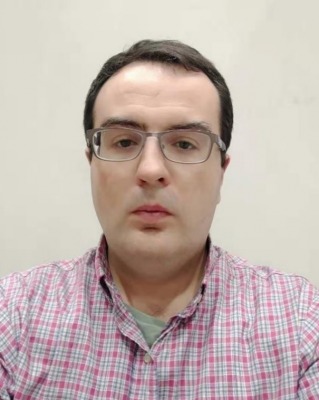
Senior Lecturer in Ceramics
Editor of European Ceramic Society; Associate editor Journal of the American Ceramic Society and Journal of Applied Ceramic Technology; Member of EPSRC Peer Review College
Engineering 340, Mile End


| Expertise: |
Dr. Salvatore Grasso is a Senior Lecturer in Ceramics at Queen Mary University of London, with a research record spanning 250+ publications, 28 granted patents, over 13,000 citations, and an h-index of 63. He holds a Royal Society Industry Fellowship (2025 to 2029) in partnership with Ceres Power, is Editor of the Journal of the European Ceramic Society, and serves as Associate Editor of both the Journal of the American Ceramic Society and the International Journal of Applied Ceramic Technology. His distinctions include the IOM3 Pfeil Award, the premier UK recognition in ceramics science, the best paper prize of the Journal of the Asian Ceramic Society, and the Dean's Award for Best Doctoral Thesis (NIMS, Japan). What drives his research is a deceptively simple question: can we make better materials by using less energy? Conventional ceramic manufacturing relies on furnaces running for hours at temperatures exceeding 1500 deg C, a process largely unchanged since antiquity. Dr. Grasso's programme dismantles this paradigm from two directions simultaneously. At one extreme, ultrafast high temperature sintering densifies advanced ceramics in seconds rather than hours, slashing embodied energy and carbon footprint. At the other, cold sintering, inspired by geological lithification, consolidates materials at near ambient temperatures, opening entirely new processing and recycling routes for battery electrodes and layered functional materials. Bridging both extremes is a unified platform of electromagnetic field assisted processing, where currents reaching 1 Mega Ampere, voltages of tens of kilovolts, and magnetic flux densities up to 15 Tesla replace brute thermal energy with precise, controllable electrical power. Electricity, as a noble form of energy, enables a degree of process control that conventional processing simply cannot match. This full spectrum approach, from room temperature to 3000 °C and from fundamental mechanism to industrial scale, underpins active collaborations with Ceres Power, UBH Group, and Morgan Advanced Materials, and anchors two live grants: the EPSRC/Defra Green Loop project on photovoltaic panel recycling and the Royal Society Industry Fellowship on solid oxide cell manufacture. The MagMat facility (www.magmat.sems.qmul.ac.uk/ , the UK's only strong magnetic field materials processing platform, sits at the heart of this programme and serves researchers across four QMUL divisions. Keywords: Functional ceramics for energy: fuel cells and solid state batteries Sustainable manufacturing: ultrafast high temperature sintering and cold sintering Advanced material processing: strong magnetic field alignment, field assisted processing, thermal shock synthesis |
| Research Centre: | Sustainable Engineering |