

Dr Marco Pensalfini
BSc (Bologna); MSc (Bologna); PhD (Dr. Sc. ETH)
Research Group Members
Fibrous Biomaterials Laboratory @ QMUL
 |
Established in 2024, the FBL combines experiments and simulations to investigate the multiscale biomechanics and mechanobiology of highly deformable materials that derive their properties from fibre networks, such as connective tissues, epithelia, and their surrogates. |
Current Group Members
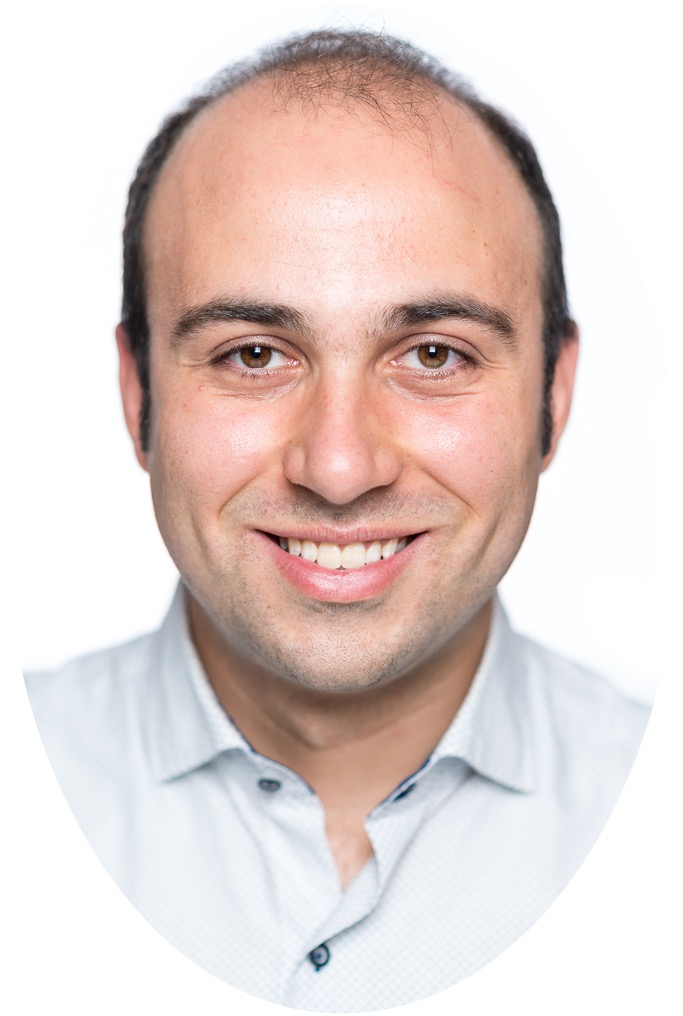 |
Marco Pensalfini - Group leader Marco has been a faculty member of QMUL since 2024. He completed his PhD at ETH Zurich, after which he worked for the MedTech company Zimmer Biomet and at Universitat Politècnica de Catalunya. He has also been a visitor at Purdue University and UW-Madison. His work received the 2020 SKINTEGRITY.CH Young Investigator Award and an ERC in Italy 2025 Best Frontier Research Project Award. |
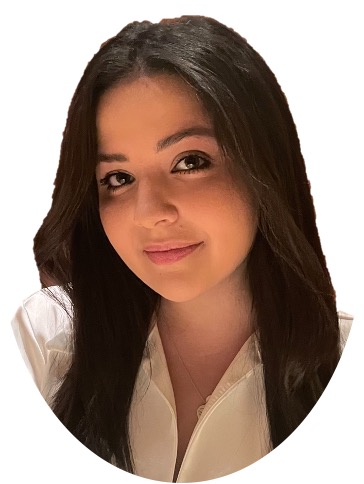 |
Sara Piccirillo - PhD researcher Sara graduated from QMUL with a BEng in Biomedical Engineering in 2024 and is currently pursuing a PhD in Medical Engineering, co-supervised by Dr. Inês Sequeira (QMUL Dentistry). Her research aims to identify biomechanical factors determining alternative scarring phenotypes in skin vs. oral mucosa. |
Ongoing Student Projects
- The Wearable Crew (team of 6 MEng students): AI-assisted design and fabrication of architected wearable patches with skin-like deformability.
- Megsha Bakshi: Synthesis and characterisation of biodegradable superabsorbent polymers for sustainable healthcare applications.
- Jaydev Nahakpam: AI-accelerated physics-informed computational design of organohydrogels for tissue engineering.
- George Ahrens: Computational modelling of the electromechanical behaviour of the esophageal sphincter.
- Nadia Hamandi: Development of a portable device for the mechanical characterisation of soft biological tissues.
Group Alumni
- The Ageing Crew (MEng '26) worked on data-driven computational modelling of ageing facial skin biophysics based on previously collected suction data.
- Elif Agillar (BME MSc '26) developed multiscale computational models capturing the mechanical behaviour of organo-hydrogels for tissue engineering in collaboration with Prof Gautrot's group at QMUL.
- Cheng-Hao Chang (BME MSc '26) developed proof-of-concept for wearable patches with skin-like deformability based on architected material design using DLP 3D printing and computational modelling.
- Omar Hamad (BME MSc '26) characterised the uniaxial mechanical behaviour of nanocomposite elastomers at progressive stages during their production process.
- Priyanthy Vijayakumar (BME MSc '26) characterised the uniaxial cyclic and viscoelastic mechanical behaviour of scar sheets.
- Prapti Shrestha (BME MEng '26) characterised and modelled the multiaxial deformation behaviour of scar sheets. Her work in our group received the Best Undergraduate Research Poster Award at SEMS Industrial Liaison Forum (March '25).
- Oreoluwa Adeoye (BME MSc '25) characterised the cyclic uniaxial deformation behaviour of nanocomposite elastomers for cardiovascular applications.
- Nirshanth Aravindhan (BME MSc '25) developed computational models to understand the mechanical interplay between scar sheets and the underlying tissues.
Current PhD Projects
| Thesis Title |
|---|
| Biomechanics of scarless wound healing |
| Biosensor functionalised organ-chip platforms for improved versatility of predictive in vitro models |
| Engineered Recombinant Strategies to Organo-Hydrogel Design with Applications from Plant-Based Foods to Tissue Engineering |
| Investigating atrial fibrillation disease progression through UK Biobank data digital twins |