

Dr Onno Kramer
PhD, MSc, BSc, AMIChemE
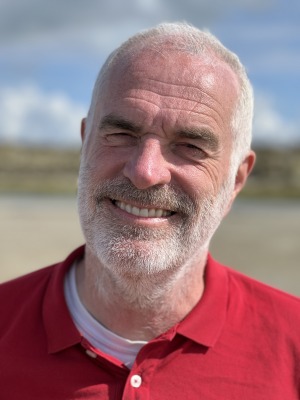
Visiting Professor
Asset Management Policy Adviser, Drinking Water
SEMS School Office, Engineering, Mile End


| Expertise: | Drinking Water Engineering, Water Treatment Processes, PFAS and Emerging Contaminants, Water Quality, Source Development, Multiphase Flow, Process and Reactor Design, Modelling and Experimental Validation, Technology Innovation and Scale-Up, Strategic Innovation, Systems Thinking, Future-Oriented Vision Development, Sustainability and Circular Water Solutions, Research and Development, Engineering Education and Knowledge Transfer, Science Communication, Art and Media, Mentoring and Personal Development. |
| Affiliations: | Waternet (Amsterdam, the Netherlands) |
Brief Biography
Onno Kramer brings academic and industrial experience to drinking water challenges where technology, natural systems and society meet. He is particularly drawn to questions whose direction is still emerging, using technical depth, curiosity and a broad systems perspective to recognise connections, open new possibilities and turn uncertainty into informed and practicable choices.
Research, education and professional practice form a continuous exchange. Questions from the field stimulate academic enquiry, insights are explored through modelling, experimentation and structured scale-up, and experience from implementation feeds back into learning and professional development. Bringing together people, disciplines and generations helps knowledge mature into shared capability and lasting application.
This approach reaches beyond technical performance alone. Possible pathways are considered in relation to resources, infrastructure, governance, operational realities and public trust, with attention to what they mean for people and the future of drinking water.
TOSIS provides a practical framework for this way of working. Troubleshooting, Optimisation, Selection and Innovation offer different pathways for technological development, while Systems Architect connects them within the wider context. Together, they help move from detailed understanding towards solutions that are evidence-based, explainable, implementable and resilient over time.
"Let's collaborate on creating resilient water systems for the future."
Research, education and professional practice form a continuous exchange. Questions from the field stimulate academic enquiry, insights are explored through modelling, experimentation and structured scale-up, and experience from implementation feeds back into learning and professional development. Bringing together people, disciplines and generations helps knowledge mature into shared capability and lasting application.
This approach reaches beyond technical performance alone. Possible pathways are considered in relation to resources, infrastructure, governance, operational realities and public trust, with attention to what they mean for people and the future of drinking water.
TOSIS provides a practical framework for this way of working. Troubleshooting, Optimisation, Selection and Innovation offer different pathways for technological development, while Systems Architect connects them within the wider context. Together, they help move from detailed understanding towards solutions that are evidence-based, explainable, implementable and resilient over time.
"Let's collaborate on creating resilient water systems for the future."