

News
SEMS research team develops degradable electronic skin for high-fidelity sensing and robotics
18 November 2026


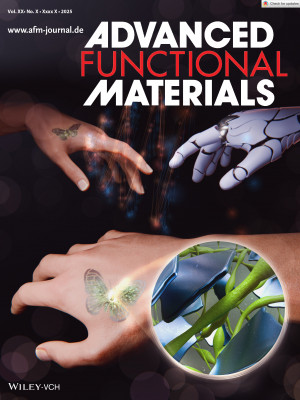
The Papageorgiou group at Queen Mary University of London, working with collaborators at partner institutions, has developed a soft electronic patch that can detect movement and record electrical signals from the body. Made from gelatin, starch and MXene, the proof-of-concept patch could inform the design of future wearable devices.
The e-patch consists of a soft gelatin base carrying a conductive pattern made from starch and a small amount of MXene, a thin, electrically conductive material. A drop of water helps the patch adhere to the skin without a separate adhesive or conductive gel.
In laboratory tests, the patch detected small movements and continued to function over 10,000 mechanical cycles. The researchers also demonstrated its use in tracking body movement and recognising hand gestures. In one demonstration, signals from patches on the fingers were used to control a robotic hand wirelessly.
The team also used the patch to record electrical signals associated with heart activity, muscle activity and eye movement. These demonstrations point to possible future uses in health monitoring, assistive technologies and human–machine interaction.
The work forms part of NEED2D, an Engineering and Physical Sciences Research Council-funded Programme Grant exploring ultra-low-energy technologies based on two-dimensional materials.
The open access paper, “Degradable, Skin-Conformal Nanocomposite-Based Bioelectronic Patches for High-Fidelity Electrophysiology and Gesture-Controlled Robotics” is available at: https://advanced.onlinelibrary.wiley.com/doi/10.1002/adfm.78792
| Contact: | Dimitrios Papageorgiou |
| Email: | d.papageorgiou@qmul.ac.uk |
| People: | Dimitrios PAPAGEORGIOU Oliver FENWICK Colin HUMPHREYS Karin HING |
| Research Centre: | Sustainable Engineering |