

News
Queen Mary hosts global showcase of bone and musculoskeletal research
28 July 2026


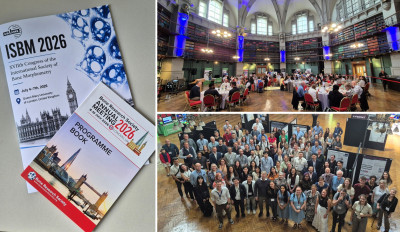
Queen Mary University of London has reinforced its position as a leading international centre for musculoskeletal research by successfully hosting two major scientific conferences back-to-back on its Mile End campus this July.
The XVIIth Congress of the International Society of Bone Morphometry (ISBM 2026) from 4th - 7th July was followed immediately by the Bone Research Society (BRS) Annual Meeting 2026 from 8th - 10th July. Dr Stefaan Verbruggen, and his team at the Verbruggen Lab, chaired both events, bringing together leading researchers, clinicians, engineers, imaging specialists, healthcare professionals, industry partners and early-career investigators from around the world to London for an exceptional week of scientific discovery, collaboration and innovation.
The International Society of Bone Morphometry Congress showcased the latest advances in quantitative skeletal imaging, bone biology and musculoskeletal research. Delegates explored topics ranging from osteocyte biology and mechanosensing to spatial omics, artificial intelligence, computational imaging and bone regeneration. The congress highlighted emerging technologies that are transforming our ability to understand skeletal tissues across multiple scales, while providing valuable opportunities for training, networking and collaboration across disciplines.
Immediately following ISBM 2026, Queen Mary welcomed the Bone Research Society Annual Meeting back to London for the first time in almost two decades. The three-day conference featured internationally recognised speakers, scientific symposia, workshops, poster presentations and networking events spanning fundamental, translational and clinical research. Key themes included osteoporosis and fracture prevention, rare bone diseases, osteoarthritis, bone cancer, advanced imaging, spatial multi-omics, mechanobiology, regenerative medicine, biomaterials and novel in vitro models.
The two meetings reflected both the breadth and depth of Queen Mary's research strengths. Delegates had the opportunity to visit the Queen Mary NanoVision Centre and the Centre for Predictive In Vitro Models, showcasing cutting-edge facilities that are helping to drive advances in imaging, organ-on-a-chip technologies, tissue engineering and computational analysis. These facilities exemplify the interdisciplinary approach that underpins much of Queen Mary's research activity and its commitment to developing innovative approaches to understanding and treating musculoskeletal disease.
As musculoskeletal diseases continue to affect hundreds of millions of people worldwide, the discoveries, discussions and collaborations established during these conferences will help shape future advances in prevention, diagnosis and treatment. Queen Mary is proud to have provided the venue where many of those conversations began, further strengthening its reputation as a global leader in biomedical engineering, skeletal biology and musculoskeletal research.
| Contact: | Stefaan Verbruggen |
| Email: | s.verbruggen@qmul.ac.uk |
| Website: | |
| People: | Stefaan VERBRUGGEN |
| Research Centre: | Bioengineering |