

News
Queen Mary and SIIT inspire future health innovators through 2026 Health & Care Innovation Sprint
9 June 2026


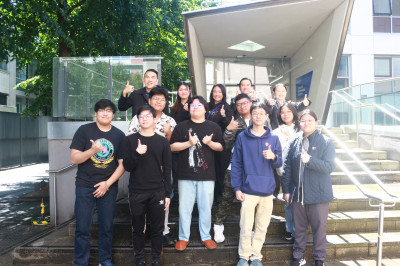
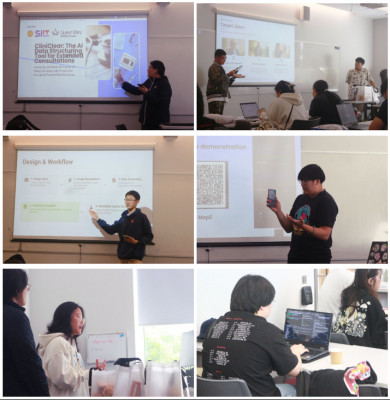
The School of Engineering and Materials Science (SEMS) at Queen Mary University of London, through Prof Zion Tse, Assoc. Prof Waree Kongprawechnon, Dr Chayabhan Limpabandhu, and their team, has delivered the 2026 Health & Care Innovation Sprint in collaboration with the Sirindhorn International Institute of Technology (SIIT), Thammasat University, Thailand.
Supported by the British Council, this co-developed programme brought together academic expertise from both institutions to mentor students in developing creative solutions for global healthcare challenges. A special thank you to Dr Chinnapat Panwisawas for opening the session and sharing his inspiring career path from Thailand to the UK. His story left many students feeling encouraged and motivated.
The intensive seven-day initiative immersed students in UK academic culture through observational research and campus visits to Queen Mary University of London, King’s College London, Imperial College London, University College London, and the University of Oxford.
The programme culminated in a final showcase where four teams pitched their ideas:
- CliniClear (Kanta and Chinchutha): An AI data-structuring tool using a secure QR-Bridge to streamline GP administrative history-taking.
- Application for blind people (Baromkorn and Chartcharn): A hands-free indoor navigation app utilising audio-haptic feedback for the legally visually impaired.
- Smart Dementia Glasses (Pawaris and Srigrid): AI glasses that provide navigation and facial recognition for patients while reducing caregiver workload.
- TummyBuddy (Supphasan and Thanayos): A personalised digital assistant predicting gastrointestinal discomfort based on food composition.
The judging panel, which included Prof Zion Tse from Queen Mary and Assoc. Prof Waree Kongprawechnon, Asst. Prof Sasiporn Usanavasin, and Assoc. Prof Chalie Charoenlarpnopparut from SIIT praised the students for their caring, thoughtful, and human-centric approaches to healthcare challenges. To help the students foresee the long-term potential of their projects, the panel provided practical, multidimensional feedback that balanced clinical value and technological application with a forward-looking business strategy.
Students also reflected warmly on the experience, saying the programme gave them the chance to visit the UK as tourists and to explore university life, research, and innovation through campus tours. Through visits to leading institutions and conversations with academics, students and mentors, they were able to see different ways of learning, thinking, and developing ideas. They shared that the sprint encouraged them to look more closely at real health and care problems, and to turn their observations into practical solutions that could make a meaningful difference.
| People: | Zion TSE Chinnapat PANWISAWAS |
| Research Centre: | Bioengineering |