

News
PhD studentship on a critical project about carbon capture - apply by 19 January!
18 December 2025
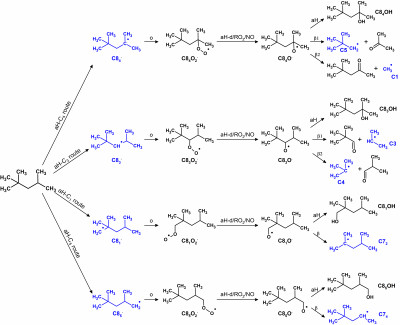
Topic: Mitigation of radical chain reactions in dense-phase CO2 streams by neutralizing NO2 via methanol and ammonia
Length: 4-year stipend (at £21,874/y)
Application deadline: 19 Jan 2026
International fees covered, overseas applicants welcome.
Industrial partners: TWI and Shell Global.
Background:
Large-scale projects for carbon capture and storage (CCS) are a vital component of humanity’s effort to mitigate climate change. The predicted scale is enormous (5-10 Gtonne/y of CO2 sequestrated by 2050), and is only achievable through large infrastructure used by many emitters simultaneously (the so-called hub CCS projects – transport networks and injection facilities). Each CO2 stream produced by each emitter carries a specific spectrum of impurities – NOx, SOx, CH3OH etc. Upon mixing of the streams, the impurities react with each other and produce dangerous products – H2SO4, HNO3, hygroscopic salts – that result in unacceptable corrosion rates. To control the corrosion, the emitters are currently required to purify the CO2 stream to unprecedented extent, which is expensive. We must develop alternative ways to avoid corrosion to make CCS affordable to more emitters.
Objectives:
The aim of this PhD studentship is to investigate the mechanisms of the reactions that lead to corrosion and, possibly, to develop methodologies to mitigate these processes. The particular focus is competitive oxidation in mixtures of NOx, SOx, H2S and CH3OH dissolved in CO2.
The studentship is focussed on modelling work mainly (reaction kinetics, thermodynamics, solvent effects), but it will involve analysis of experimental data by our partners, and – if the student wants to – actual experimental work. The expected outcome of this project is a tool to simulate the radical chain reactions between the impurities.
Skills we are looking for:
Candidates with background in chemistry, physics and chemical engineering are welcome to apply. Good understanding of chemical kinetics is required. Some experience with computer algebra packages (Maple, Mathematica, Python) is a plus. Most important is the enthusiasm and dedication. This is a project that matters!
Your prospects:
CCS is going to become one of the top 10 processes by capacity in the next 20 years. There is already hunger for specialists in this field. Therefore, by the time you finish your PhD, you will be a highly valued expert in a major new industry.
Do not hesitate to contact us for questions!
To apply - click here.
| Contact: | Radomir Slavchov |
| Email: | r.slavchov@qmul.ac.uk |
| Website: | |
| People: | Radomir SLAVCHOV |
| Research Centre: | Sustainable Engineering |