

News
International Women in Engineering Day: Engineering Intelligence with Dr Deepshikha
23 June 2026


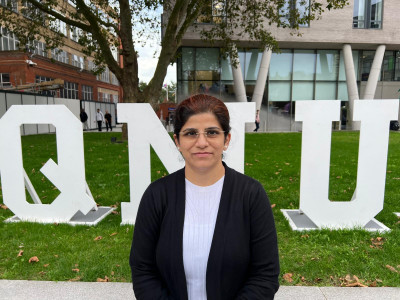
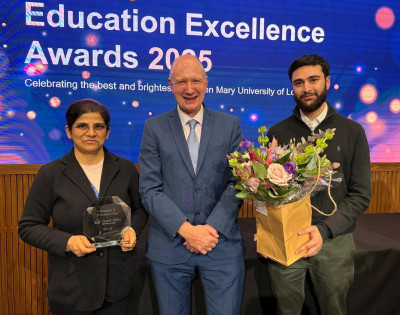
This year's theme for International Women in Engineering Day is Engineering Intelligence, so we're highlighting the work of one of our academics who is researching, advising and innovating Artificial Intelligence for education.
Dr Deepshikha is a founder of EduMark AI, an educator-controlled platform designed to support rubric-based marking, personalised feedback and human-in-the-loop academic judgement.
In her materials science and chemistry research and teaching, she is an expert in graphene, but her recent interest has turned her into a thought-leader in AI and its applications in Higher Education.
Her academic background demonstrates a strong interest in both science and education. She achieved a first-class degree in Education, was awarded a Gold Medal in her Master’s in Chemistry, completed her PhD in Chemistry, and undertook postdoctoral research, developing specialist expertise in nanochemistry.
Her current work "focuses on ensuring that AI supports, rather than replaces, academic judgement, while improving feedback quality, assessment literacy and student confidence” and “contributes to international conversations on how AI can be used responsibly and meaningfully in higher education.”
Deepshikha was awarded Queen Mary’s President and Principal’s Award for Educational Excellence 2025, recognising her leadership, educational innovation, and impactful work in advancing AI-enabled assessment and feedback through her EduMark AI project.
Deepshikha was recently selected for a Google fellowship – the Higher Education Faculty AI Fellowship which is “shaping the future of AI in Higher Education”. Google says that the cohort is "some of the most forward-thinking minds in academia globally," with successful applicants chosen because they "don't just see the potential of AI, they see the responsibility that comes with it." The fellowship will support Deepshikha in leadership and developing strategies for using AI for institutional impact.
She said, “I am looking forward to working with colleagues across the EMEA region to explore scalable, ethical and student-centred approaches to AI in assessment and learning.”
Deepshikha has also been selected to be featured in OpenAI’s global “Professors Teaching with AI” series, recognising her innovative work on EduMark AI and her contribution to advancing responsible, student-centred applications of AI in assessment and feedback.
Deepshikha has also been awarded an AI Skills 4 Women scholarship from Microsoft – recognising her as an emerging leader in driving real-world AI applications and responsible digital transformation. She has been accepted onto the Innovate UK ICURe Explore Programme (£35,000) to help bring her research with EduMark AI to market, and EduMark has been awarded £9,000 from the Queen Mary Impact Fund for a project on AI-enabled Assessment.
She spoke to us about her work and inspiration.
What interested you about studying chemistry and materials?
My interest in chemistry and materials began with a fascination with understanding how the smallest changes at the molecular or nanoscale level can significantly influence the properties and behaviour of materials. Chemistry gives us the language to understand matter, while materials science allows us to apply that understanding to real-world problems.
During my PhD, I worked on the synthesis and characterisation of nanostructured conducting polymers for biosensor applications. This gave me a strong appreciation of how interdisciplinary materials research can contribute to areas such as healthcare, energy, electronics and environmental technologies. Later, my postdoctoral research on graphene-based devices further strengthened my interest in advanced materials and their potential to address global challenges. I have always been drawn to the way materials science sits at the intersection of chemistry, physics, engineering and innovation.
What was the catalyst that inspired you to start researching AI?
The main catalyst was my teaching and assessment practice. As an educator, I became increasingly aware of the amount of time academics spend marking, giving feedback, and ensuring that students receive comments that are timely, personalised, and useful for improvement. I also saw that students often need feedback earlier, while it is still actionable, rather than only after summative assessment.
This led me to explore whether AI could be used responsibly to support assessment and feedback processes. My work on EduMark AI grew from this need. The project investigates how AI can assist educators with grading and personalised feedback while keeping academic judgement, educator review and ethical governance at the centre. I am particularly interested in how AI can support consistency, transparency and assessment literacy, rather than simply speeding up marking.
For me, AI became a research interest because it offered a practical way to address a real educational challenge: how to provide high-quality, timely, and meaningful feedback at scale without removing the human expertise essential to good education.
What makes you passionate about education?
Education has the power to change confidence, opportunity and life direction. I am passionate about teaching because I enjoy helping students move from uncertainty to understanding, especially in subjects that can initially feel difficult or abstract, such as chemistry, materials science and engineering concepts.
My teaching approach is built around making learning active, inclusive and connected to real-world applications. I enjoy active learning using simulations, virtual labs, co-created assessments, problem-solving activities and authentic examples to help students see why their learning matters. I am also particularly passionate about assessment, feedback and feedforward. For me, feedback should not simply explain what went wrong after an assessment has ended; it should help students understand how to improve, what steps to take next, and how to apply that learning to future tasks. This feedforward approach is central to my educational practice because it turns assessment into a developmental learning process rather than a final judgement.
As an educator, I find it very rewarding to support diverse learners and to create learning environments where students feel encouraged, challenged and capable of progressing. Seeing students gain confidence, act on feedback and improve over time is one of the most meaningful aspects of teaching for me.
How do you see AI impacting the future of education?
I see AI having a significant impact on the future of education, but I believe that impact must be guided by responsibility, transparency and human oversight. AI has the potential to support personalised learning, provide timely formative feedback, help students practise before summative assessments, and assist educators with time-intensive tasks such as drafting initial feedback, mapping rubrics, and identifying common learning gaps.
However, AI should not replace the educator. The most valuable future is one where AI acts as a supportive partner, helping teachers and students make better use of time, evidence and feedback. Educators will remain essential for interpretation, empathy, disciplinary judgement, ethical decision-making and understanding the wider context of student learning.
In the future, I hope AI will help us move towards assessment models that are more authentic, transparent and developmental. Used well, AI can help students build confidence, understand standards, practise more effectively and receive feedback when it can still make a difference. The challenge is to ensure that AI is used in ways that strengthen trust, fairness and learning, rather than creating new risks or reducing education to automation.
| Contact: | Ayden Wilkes |
| Email: | a.wilkes@qmul.ac.uk |
| People: | Deepshikha DEEPSHIKHA |