

News
Aerospace Engineering takes off with new flight simulator to advance aviation teaching and research
26 March 2026


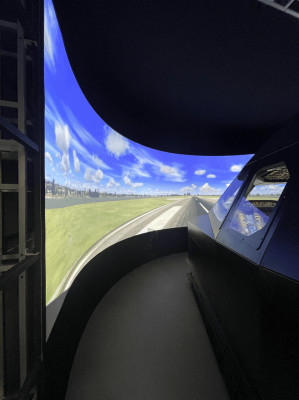
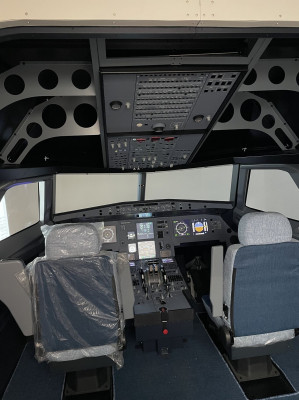
Queen Mary University of London has strengthened its aerospace and intelligent transport capabilities with a new A320-based flight simulator from CnTech, creating a powerful new platform for immersive teaching, advanced research and future aviation innovation.
Queen Mary University of London has expanded its aerospace and intelligent transport capabilities with the arrival of a new flight simulator from CnTech. Built around a 1:1 A320 cockpit layout, the simulator is a distinctive new facility for hands-on learning, research and aircraft prototype development.
The simulator combines a realistic enclosed cockpit with advanced flight control software, an instructor operation station and a 180-degree visual system designed to create an immersive flying environment. Its features include dual sidesticks, rudder pedals, handwheels, flight management and avionics systems, as well as configurable training scenarios covering aircraft position, weather and system malfunctions.
What makes the new facility especially exciting is its potential as a research platform. Its software, network protocols and selected hardware interfaces have been opened to support further development by Queen Mary, including the ability to integrate MATLAB and Simulink for real-time testing of new aircraft models and flight control algorithms. That gives the scope to use the simulator not only for demonstration and teaching, but also for work in flight dynamics, avionics, control systems, human-machine interaction and future aerospace technologies.
Following its recent installation and initial staff training, the simulator will continue through commissioning and testing in the coming months as Queen Mary develops the facility for longer-term academic use. The ambition is to build a sustainable capability that supports research, specialist teaching, supervised student engagement and future collaboration with external partners.
Professor Hazel Screen, Head of School, said:
“This is an exciting investment for the School and a strong addition to our research and teaching infrastructure. Facilities like this help bring complex engineering concepts to life, while also creating new opportunities for interdisciplinary collaboration and future-facing innovation in aerospace and intelligent transport.”
Dr Jun Chen, Reader in Intelligent Systems Engineering, said:
“This is a major step forward for Queen Mary. The simulator gives us a highly realistic flight environment, but just as importantly it provides a flexible platform for research and development. Its open architecture will allow us to explore new ideas in flight simulation, control systems, avionics and human-machine interaction, and to create opportunities that connect teaching with cutting-edge innovation.”
With its combination of realism, flexibility and development potential, the new simulator is set to become a flagship facility for Queen Mary — supporting both today’s learners and the next generation of aviation research.
| Contact: | Jun Chen |
| People: | Jun CHEN |
| Research Centre: | Intelligent Transport |