

SEMS Research Facilities
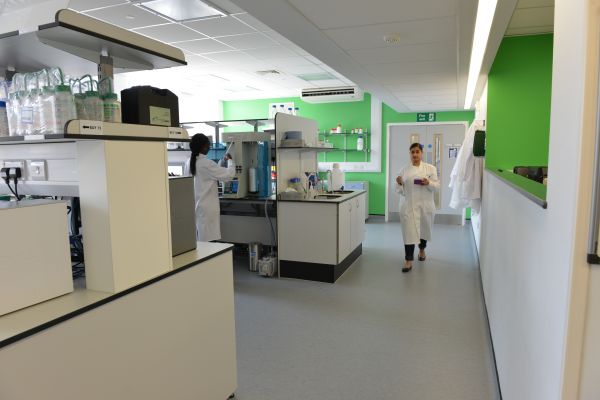
The School benefits from an excellent range of experimental and computational facilities and resources.
The facilities are and are also used for industrial contract testing and external collaborations. In addition researchers within the school have access to many other specialised research facilities elsewhere in the college, such as Nanoforce, NanoVision and the Blizzard Institute for Cell and Molecular Science.
Facilities
On this page:
- Cell and Tissue Engineering Labs
- Centre for Advanced Robotics at Queen Mary (ARQ)
- Combustion Laboratory
- Computational Modelling Facilities
- Confocal Laser Scanning and Super-resolution Microscopy Lab
- Design Studio
- Electrical Characterisation Facilities
- Electrochemistry Facilities
- Flight Simulator
- Hardness Test Machine
- Human Performance Lab
- Intelligent BioFluids Lab
- The Makerspace
- Materials Characterisation Lab
- Materials Engineering in Magnetic Fields (MagMat) Facility
- Mechanical Testing Facilities
- Mechanical Workshop
- Mechanobiology and BioAFM Laboratories
- Medical Electronics Facility
- Nano Fluids Research Labs
- NanoVision Centre
- Photoelectrochemical Imaging Lab
- Photoelectron Spectroscopy Facility
- Photovoltaic device testing
- Piezoelectric energy harvester tester
- Polymer Processing Facility
- Queen Mary+Emulate Organs-on-Chips Centre
- Spectroscopy Facility
- Sustainable Thermal Systems Laboratory
- Thermal Analysis Facility
- Thermoelectric Generator Testing Facility
- Thermoelectric Suite
- Undergraduate Teaching Labs
- Whitehead Aeronautical Laboratory
- X-Ray Diffraction Facility
Cell and Tissue Engineering Labs
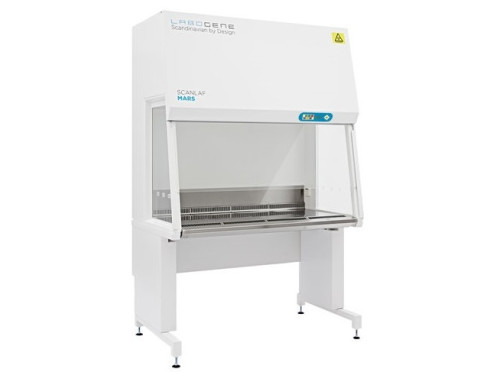
LaboGene Microbiological Safety Cabinet
The cell and tissue engineering laboratories provide extensive facilities for tissue engineering, mechanobiology and biomechanics research and teaching. The facilities include five dedicated cell culture laboratories, a molecular biology facility and general purpose and biochemistry laboratories. The labs house machines for mechanical testing of biological tissues or implantable materials as well as equipment for a wide range of biochemical/cell biology analysis.
Contact: Mr Shafir Iqbal
Centre for Advanced Robotics at Queen Mary (ARQ)
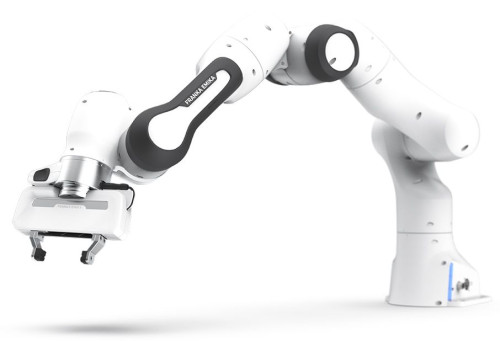
The laboratory of the Centre for Advanced Robotics at Queen Mary (ARQ) is equipped with robotics-arms, mobile platforms, mechatronic and control systems, swarm robots, human-like robotic systems, virtual reality and haptic interfaces, human motion tracking system. The laboratory is managed by ARQ and is located on the ground floor (G16) of the West wing of the Engineering building.
Contact: Prof Kaspar Althoefer
Combustion Laboratory
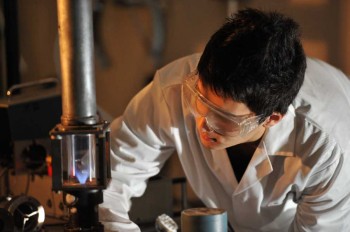
Research in combustion science concentrates on engine performance testing and emissions. The Internal Combustion Engine laboratory contains five test beds. These include a four cylinder diesel engine with optical access to the combustion chamber and a variable compression ratio Ricardo engine. Current projects include duel fuelling and the development of biodiesels as alternative fuels for compression ignition engines. In addition the school possesses an almost unique, high pressure, steady-state combustion rig for studying the fundamental physics behind the combustion process.
Contact: Prof Xi Jiang
Computational Modelling Facilities
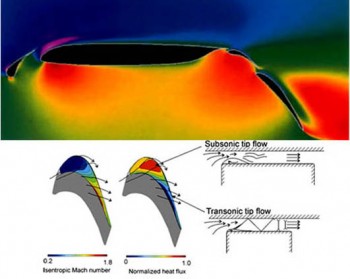
Prediction of flow around : 1- A Multi-Element Wing 2-A Jet Engine Gas Turbine Blade using Computational Aerodynamics.
Researchers of the Centre have prime access to 6 dedicated Lenovo ThinkSystem SD530 compute nodes with Cascade Lake CPUs.
Altogether, the compute nodes are equivalent to an HPC cluster of about 300 CPU cores for running parallel simulations on-demand.
This is In addition to several more Lenovo CPU compute nodes and high-performance GPU cards, such as A100 owned by individual research groups of the Centre.
The Aerospace Group also has access to the National Supercomputer Facilitiy (HECToR), QMUL Computing Cluster and Distributed Advanced Work Station at the School of Engineering and Materials Science.
In addition, our undergraduate students are being taught Computational Methods and use Industry Based Computing packages such as (ABAQUS) for Aerospace Structures and FLUENT for Computational Aerodynamics. These packages are currently being used by Aerospace Industries such as Airbus and BAe systems.
Contact: Prof Sergey Karabasov
Confocal Laser Scanning and Super-resolution Microscopy Lab
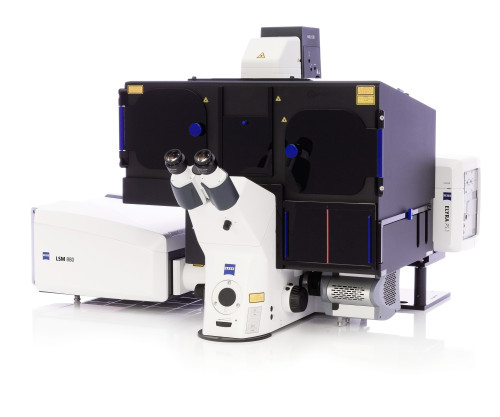
Zeiss Super resolution LSM710 ELYRA PS.1
SEMS hosts a confocal microscopy containing two laser scanning confocal microscopes - a Perkin Elmer spinning disc system and a Leica SP2 with multiphoton laser and lifetime imaging system. In addition we will soon be purchasing a new confocal microscope associated with a super-resolution system. The unit enables live cell fluorescence imaging (GFP, calcium imaging etc), 3D reconstruction and morphological measurement, photobleaching assays such as FRAP and FLIP and fluorescence lifetime microscopy(FLIM). The microscopes also interface with sophisticated mechanical loading systems for tissues, individual living cells (micropipette aspiration) and artificial constructs.
Contact: Prof Martin Knight
Design Studio
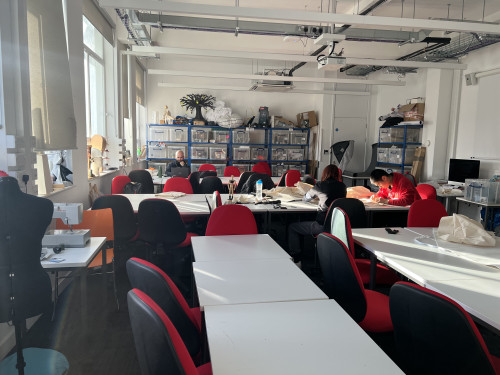
Individual work in the Design Studio
Our fully refurbished Design Studio is a creative space where students receive tutorials, share ideas, collaborate on projects, or focus on their individual work. It acts as a focus throughout the creative life of our design students, who exclusively use this space to continue their practice outside their timetabled tutorials. After design ideation, sketching and early prototyping in this space, students can cross the corridor to the Makerspace where they can build more refined test prototypes for their innovative projects using hand or machine tools.
Contact: Dr Karen Shoop
Electrical Characterisation Facilities
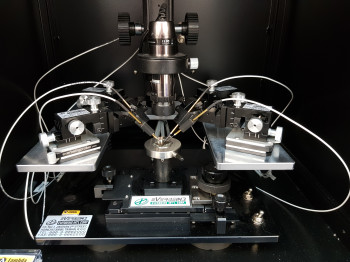
Low noise probe station
A range of electrical characterisation facilities are available for the measurement of electrical conductivity, field-effect mobility and device characteristics. This includes a 4-point probe resistivity measurement system (Osilla) and a shielded low noise probe station. These can be connected to a range of units including a Keithley 2636B SMU, a Keithley 3390 Function Generator, a Keithley 6517B/E electrometer and a GW Instek 8105G LCR meter.
Contact: Dr Oliver Fenwick
Electrochemistry Facilities
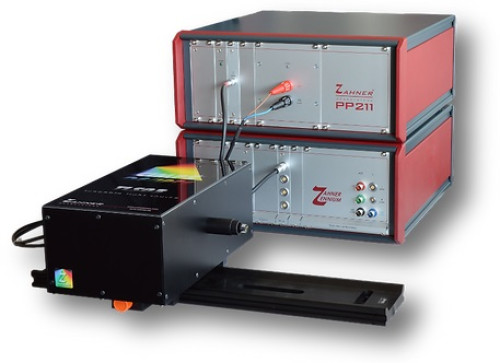
Zahner photoelectrochemistry station
We have a wide range of electrochemical and photoelectrochemical facilities for testing of energy materials. These include:
- Xe lamp 400W with solar simulator filter, potentiostat and electrochemical cell: for photocurrent measurements of photoelectrodes in multiple electrolytes, in a three-electrode (half cell) configuration, under 1 sun simulated conditions (with IR filter to avoid overheating of lamp and sample).
- Zahner photoelectrochemistry station: fully integrated photoelectrochemical workstation for high accuracy QE/IPCE measurements. Also with a tuneable LED light source that allows to measure photocurrent response at different wavelengths and possibility of measure electrochemical impedance spectroscopy, too.
- Rotating Disc Electrode (RDE) and potentiostat (with FRA for measuring electrochemical impedance spectroscopy): RDE in three-electrode electrochemical cell configuration with potentiostat to measure the electrocatalytic activity of new materials towards the oxygen evolution reaction (OER) and oxygen reduction reaction (ORR)
- Potentiostat Biologic (+/- 5V -10A) and redox flow battery system: for measuring the performance of electrode materials in full cell configuration for redox flow cell applications.
Contact: Dr Ana Sobrido
Flight Simulator
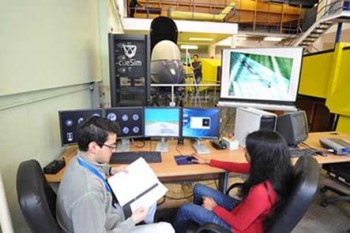
Flight Simulator
The School acquired a flight simulator with a cockpit, fully moving-base platform and virtual vision simulation for a range of visual cueing systems a decade ago. The simulator is within the Whitehead laboratory and is being used for undergraduate teaching and students' coursework and projects. All students in the Flight Simulation Module get to use the flight Simulator as part of their coursework. The School is also currently developing advanced research activities in the area of flight simulation. A new state-of-the-art Flight Simulator is currently being acquired to support our research activities and is expected to be installed in 2023.
In addition to in-house practical work Queen Mary, Aerospace students attend a one-day flight laboratory course at a National Flying Laboratory. It involves flight laboratory exercises aboard a twin turboprop JetStream aircraft. Each student will normally be on two flights each of about 50 minutes duration. Students will assess the drag, performance and the static and dynamic stability margins of the aircraft.
Contact: Dr Jun Chen
Hardness Test Machine
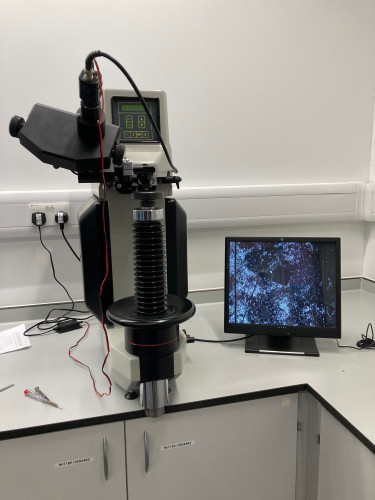
Hardness Test Hardness tester available in G27
Zwick-Roell Hardness Test Machine. Loads from 3kgf to 150kgf. The indenters available are Rockwell diamond and spherical, Brinell (1.0 andf 2.5mm diameter) and Vicker's diamond. At these load levels mainly used for metals and ceramics. There is an attached camera for recording processes.
Contact: Dr Erica di Federico
Human Performance Lab
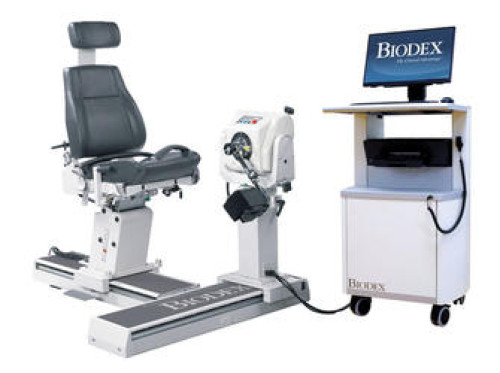
Biodex System Isokinetic Dynamometer
We analyse motion and forces in people during walking, running and many other activities. Our state-of-the-art facilities allow us to assess normal subjects, elite athletes, patients who have had an operation, or individuals with some disability. The wide range of equipment available includes: Force plate in the ground, Treadmill that can accommodate wheelchairs and motion analysis facilities, and Sensors for indicating when muscles are activated and an oxygen consumption monitor. All of these are used for undergraduate, clinical and research projects.
Contact: Dr Stuart Miller
Intelligent BioFluids Lab
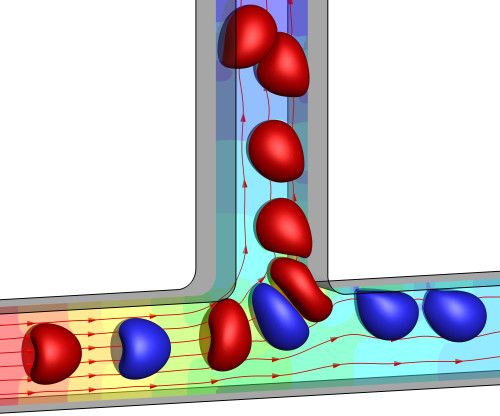
Hydrodynamic interaction of microcapsules in a microchannel bifurcation (front cover highlight in Journal of Fluid Mechanics volume 923)
Research in the intelligent biofluids and cell mechanics laboratory focuses on high-fidelity mechanical modelling and real-time ultra-high-throughput characterisation of blood and cancer cells, drug-delivery microcapsules. We also investigate flow and solute transport in extracellular matrices and interactions between flow and endothelial cells, with a particular interest in the endothelial glycocalyx. Our group integrates the state-of-the-art AI tools, mechanistic models, with microfluidic systems and high-speed imaging, to develop next-generation technologies for healthcare challenges such as cancer and cardiovascular diseases.
Contact: Prof Wen Wang, Prof Yi Sui
The Makerspace
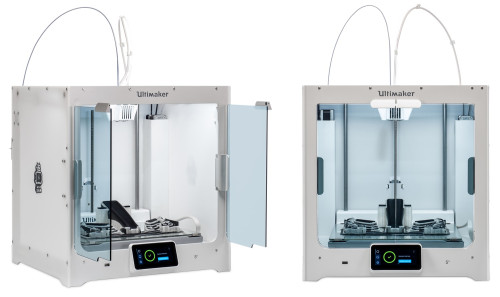
Ultimaker S5 FDM 3D Printer
The Makerspace is an open access workshop for all SEMS and EECS students and staff. It is a space where students can make things, this might be prototyping, model making or simply working on personal projects. The primary aim of the Makerspace is to give students the practical, and creative skills they will require to be effective engineers.
Contact: Mr James Wayland
Materials Characterisation Lab
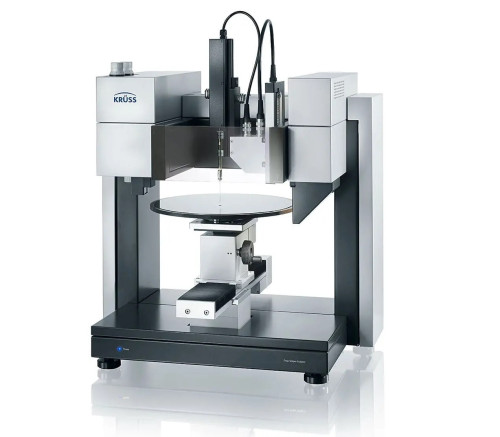
Contact Angle Goniometer
We provide a full analysis service in materials science and contains an impressive variety of analytical equipment to cover a broad range of tests and analyses, which are used for structural, thermal and mechanical analysis. The facility offers an analysis service to university-based and external users, both industrial and academic. The lab is located in the Engineering building (Room 232) at the Mile End campus. There are a range of charges for using these facilities.
Contact: Dr Shoghik Hakobyan
Materials Engineering in Magnetic Fields (MagMat) Facility

MagMat is a unique capability in the UK for the synthesis and processing of materials in strong magnetic fields (SMF) known at MagMat. This project provides the initiative for a new era of materials science where magnetic field driven forces are coupled with materials synthesis and processing to produce novel materials. Magneto related phenomena have special relevance to the fields of functional materials and biosciences, where the engineering outcomes are often a result of multifunctional couplings. The use of high magnetic fields in combination with a wide range of processing techniques could lead to new phenomena, materials and manufacturing routes. Our Work is focused on four main research areas of interest where strong magnetic fields can be employed to engineer a wide range of materials - texturing, synthesis, processing and self-assembly.
Contact: Prof Michael Reece
Contact: Dr Salvatore Grasso
Mechanical Testing Facilities
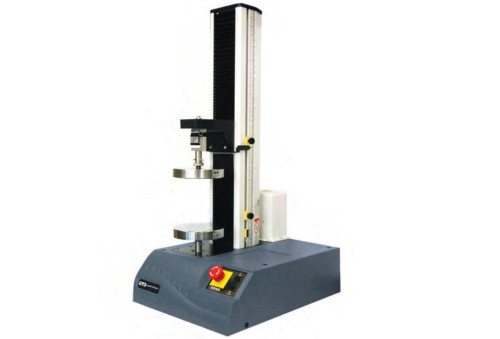
Instron 3340 series materials testing system
The School has a variety of mechanical testing equipment used to determine the mechanical properties of different materials and structures ranging from aircraft components to new implant materials or even biological tissues. These testing machines apply forces in compression, tension or torsion and can be used to find out material properties such as ultimate strength and modulus.
Contact: Dr Erica Di Federico
Mechanical Workshop
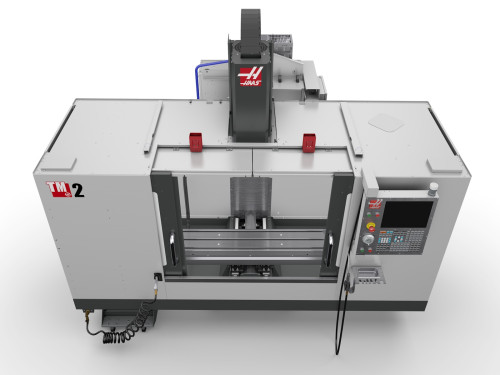
TM-2P - CNC Toolroom Mill
The School of Engineering and Material Science has a purpose built, fully equipped mechanical workshop where students and academics can come and have their parts manufactured for both research and projects relating to their field of interest. It contains both manual and CAD/CAM controlled milling and turning machines for high-speed production of complex parts in a variety of materials. Also available is a state-of-the-art FDM 3D printer for rapid prototyping in a broad range of thermoplastics. Designs and ideas can be realised by apprentice trained mechanical technicians with years of experience in a variety of engineering backgrounds.
Mechanobiology and BioAFM Laboratories
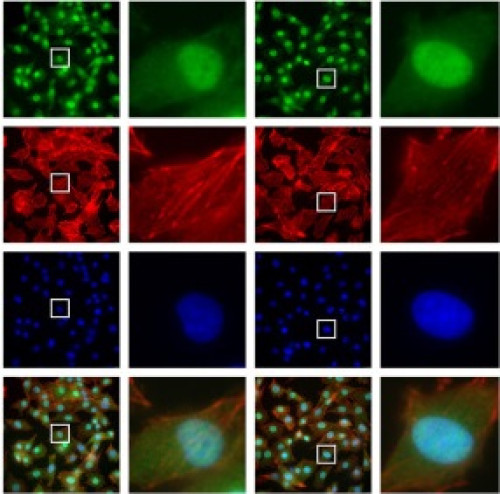
Epifluorescence images of YAP (green) and Actin (red)
The School of Engineering and Materials Science in association with the Institute of Bioengineering has extensive multi-user mechanobiology facilities.
This includes a range of bioreactor systems for subjecting living cells to dynamic mechanical loading in the form of tensile strain (Flexcell), compressive strain (Bose) and fluid shear (Osciflow & Bose). These loading systems are mounted in cell culture incubators for long term loading studies.
We also have equipment for measuring cellular mechanical properties and mechanically stimulating individual cells using biological atomic force microscopy (bioAFM), micropipette aspiration or custom built scanning ion conductance microscopy. In addition we have a range of mechanical test machines for measuring the mechanical properties of biological tissues and biomaterials under dynamic, uniaxial and biaxial loading conditions.
Contact: Prof Martin Knight
Medical Electronics Facility
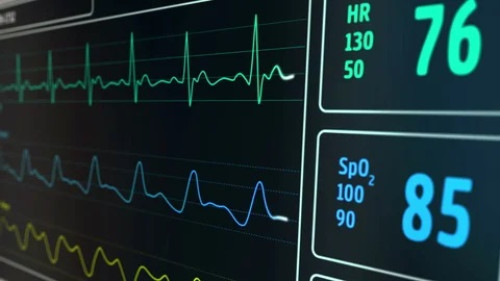
Electrocardiogram (ECG) and Oxygen Saturation level (SpO2) physiological signals.
SEMS has a customised facility for undertaking electronics work with specific expertise in the medical field. The wide range of medical equipment includes ECG monitors, ultrasound probes and pulse oximeters. The laboratory also contains a wide range of electronics components and prototyping boards, as well as microprocessor software, to make your own circuitry. The facility is used for a range of taught laboratories that focus on circuit design, and is also available for MSc projects.
Contact: Ms Jun Ma
Nano Fluids Research Labs
The School has a rapidly expanding group working on heat transfer from nano-fluids which are liquids containing nano-scale particles that act to alter the fundamental thermo-physical properties of the fluid and so increase heat transfer rates. The specific research includes formulation of nanoparticles and stable nanofluids in a purpose built laboratory. In addition, a new test facility is being constructed to investigate flow and heat transfer behavior of nanofluids in micro-tubes. The research will include mechanistic analysis of micro/nanoscale energy transportation and enhanced heat transfer performance.
NanoVision Centre
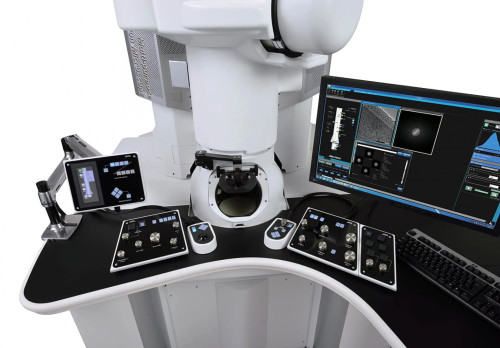
JEM-F200 Scanning Transmission Electron Microscope
The NanoVision Centre is a state-of-the-art microscopy unit which brings together the latest microscope techniques for structural, chemical and mechanical analysis at the nanometer scale (1/1000000 mm). The facility contains an impressive range of electron microscopes, scanning probe microscopes and associated analytical equipment for use in the cutting-edge research being conducted by students and staff.
Contact: Dr Subash Rai
Photoelectrochemical Imaging Lab
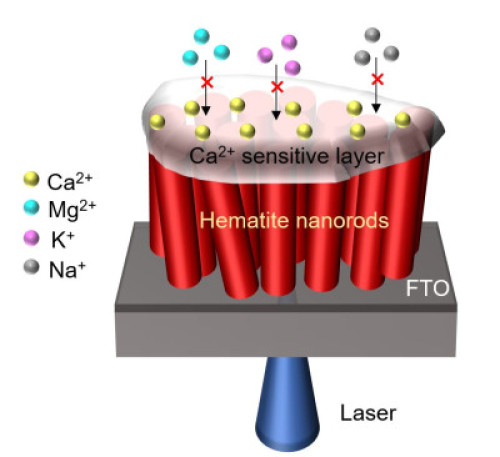
Photoelectrochemical calcium ion sensor based on hematite nanorods
Light-Addressable Potentiometric Sensors (LAPS) and Scanning Photo-induced Impedance Microscopy (SPIM) are imaging techniques based on photocurrent measurements at electrolyte/insulator/silicon (EIS) field-effect structures. They are capable of measuring local changes in the surface potential (LAPS), which can be used to image ion concentrations, and of measuring the local impedance (SPIM).
LAPS and SPIM have great potential as tools for functional electrochemical imaging of the attachment area of cells, providing information such as ion concentration, extracellular potentials and cell impedance. The techniques are particularly attractive for analysing responses of cells with planar polarisation or cell types that separate one compartment from the other as the cell-surface attachment area is not accessible to conventional electrophysiological and electrochemical imaging.
Contact: Prof Steffi Krause
Photoelectron Spectroscopy Facility
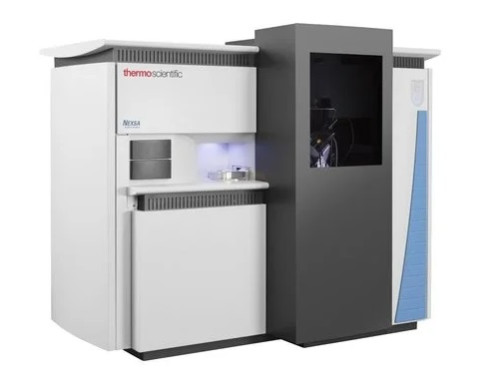
ThermoFisher Nexsa X-ray Photoelectron Spectrometer (XPS) System
A ThermoFisher Nexsa X-ray Photoelectron Spectrometer (XPS) System enables a range of photoelectron spectroscopy measurements on a range of materials. It includes facility for:
- X-ray photoelectron spectroscopy (XPS)
- Ultraviolet photoelectron spectroscopy (UPS)
- Reflection electron energy loss spectroscopy (REELS)
- Ion Scattering Spectroscopy (ISS)
Contact: Dr Richard Whiteley
Photovoltaic device testing
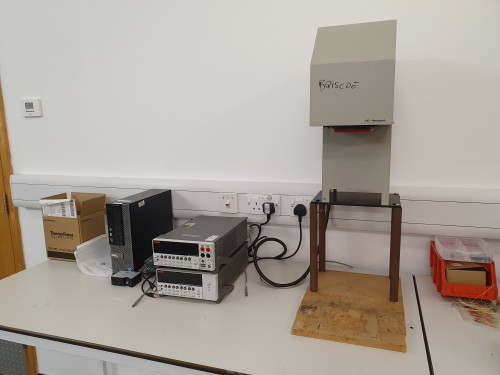
Newport AAB solar simulator
Newport AAB solar simulator with AM1.5 full solar illumination for testing of photovoltaic devices. Test facilities include a Keithley 2400 source-measure unit and associated PC and test software.
Contact: Dr Joe Briscoe
Piezoelectric energy harvester tester
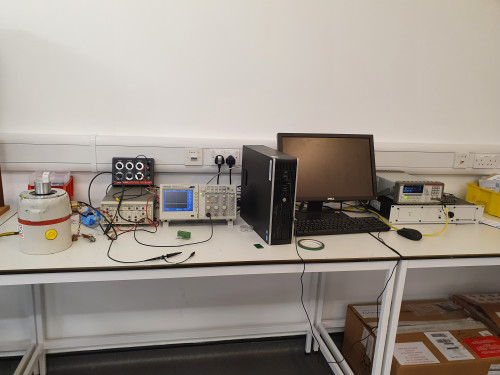
Full test facilities for testing output performance of piezoelectric energy harvesters, including:
Permanent magnetic shaker (Brüel & Kjær LDS V406)
Digital oscilloscope (Tektronix TDS2012C)
Low noise current preamplifier (Stanford Research Systems SR 570)
Signal generator and amplifier
Variable resistance box
Contact: Dr Joe Briscoe
Polymer Processing Facility
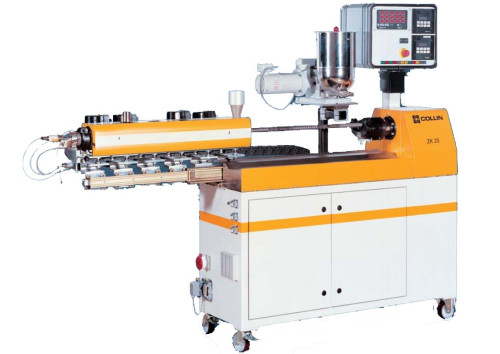
Twin screw extruder, Collin ZK25
As the first UK Materials department (1967) and one of the five Science Research Council funded Polymer Research Centres in a Materials Department, we have a long standing history and extensive research expertise in polymer and composites processing. Ranging from melt-processing (single and twin-screw extruders, injection moulding, film blowing, solid state stretching) to solution processing (electrospinning, spin coating), a wide range of polymer processing and composites equipment is available at our lab.
Contact: Dr Han Zhang
Contact: Dr Dimitrios Papageorgiou
Queen Mary+Emulate Organs-on-Chips Centre
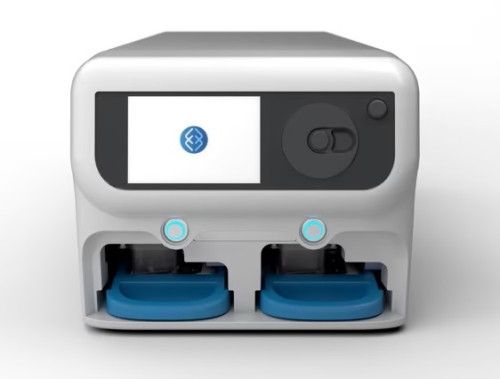
Zoë™ Culture Module
The QM+Emulate Organs-on-Chips Centre provides open access to Emulate’s Organs-on-Chips technology to enable researchers to use Emulate’s supported organ models which include: Liver, Proximal Tubule Kidney, Lung and Intestine or develop organ models of their design to expedite their experiments. Emulate's state-of-the art organ-chip platform is available for fundamental research or for use as part of a drug discovery pipeline. Expert staff are on hand to support with training and use of the platform. The Centre also provides opportunities for collaboration with Emulate and support for commercialisation and translational impact.
Contact: Prof Martin Knight
Spectroscopy Facility
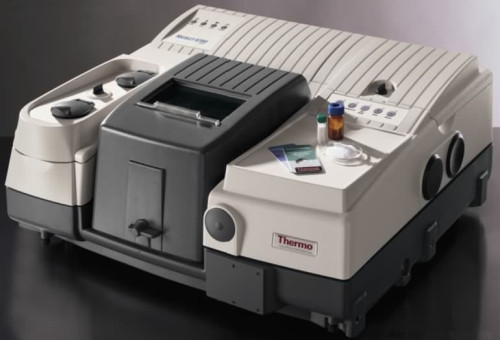
FTIR equipment for materials analysis.
We have a variety of sophisticated spectrometers which are used to identify specific compounds and investigate composition of materials prepared as either a liquid, solid, film or powder. These devices include:
- Fourier Transform Infrared Spectroscopy (FTIR)
- Raman Spectroscopy
- Near InfraRed Spectroscopy (uv-vis NIR).
Contact: Dr Shoghik Hakobyan
Sustainable Thermal Systems Laboratory
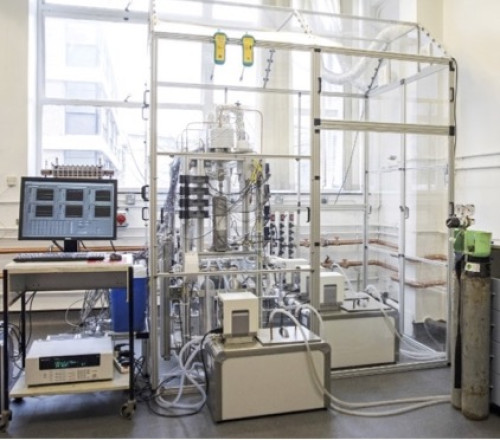
Microchannel rig to measure local condensation and flow boiling heat transfer using inverse method.
The School has an international reputation for research into two-phase flow with heat transfer. In particular, it has five test rigs for investigating various aspects of condensation and flow boiling heat transfer which has direct applications to steam power plant, nuclear power plant, organic Rankine cycle (ORC), refrigerators and air conditioners, heat pumps, solar assisted heat pump based heating systems, advanced thermal management of data centre and electric vehicle batteries and air conditioning systems for electric vehicles. These include a microchannel rig for accurate measuring local heat transfer during condensation and flow boiling of low GWP refrigerants and refrigerant mixtures up to high pressure and high temperature and a full tube bank rig for investigating the complex interactions between tube geometry and vapour and liquid flow in real condensers. Several rigs are being used to investigate and optimise highly enhanced finned tubes for increasing heat transfer rates for both internal and external flows and so reducing condenser size. In addition, two calibration baths allow calibration of thermocouples with an accuracy of +/-0.05 K from -15 oC to 200 oC.
Contact: Professor Huasheng Wang
Thermal Analysis Facility
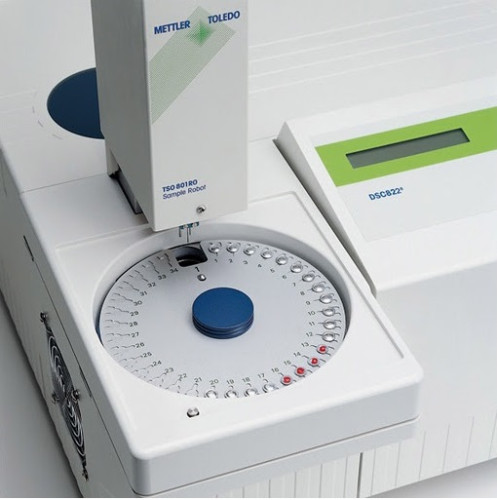
Differential Scanning Calorimeter.
We have a variety of excellent techniques for analysis the thermal properties of materials such as melting temperature, glass transition temperature, viscosity, thermal expansion and thermo-mechanical properties over a range of temperatures (-150 to 1600C). The techniques include:
- Differential Scanning Calorimetry (DSC)
- Rheometery
- Thermo Gravimetric Analysis (TGA)
- Simultaneous Thermal Analysis (STA)
- Dynamic Mechanical Analysis (DMA)
- Dilatometry.
Contact: Dr Shoghik Hakobyan
Thermoelectric Generator Testing Facility
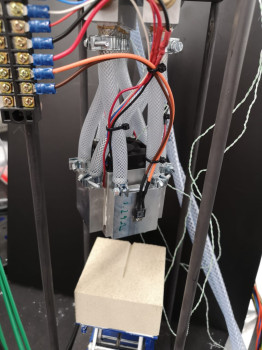
Thermoelectric generator testing
A bespoke thermoelectric generator testing facility is available for testing ceramic and printed thermoelectric generators. It can operate in clamped mode with a feedback system to maintain constant pressure. It can alternatively operated in air-cooled mode using an airjet of defined velocity and feedback-controlled temperature.
Contact: Dr Oliver Fenwick
Thermoelectric Suite
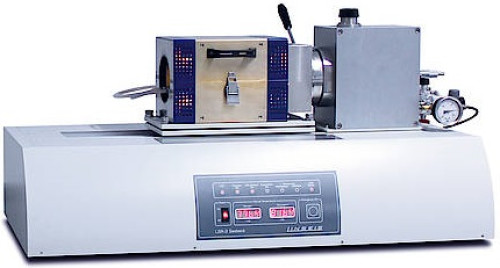
Electrical conductivity and Seebeck measurement (Linseis LSR3)
We house a suite of instruments for the accurate measurement of thermoelectric materials in bulk or thin film form, including:
- Laser Flash Analyzer (Netzsch 453 LFA)
- Electrical conductivity and Seebeck measurement (Linseis LSR3)
- Thin film electrical and thermal conductivity, and Seebeck measurement (Linseis TFA)
Contact:
Prof Michael Reece
Dr Oliver Fenwick
Undergraduate Teaching Labs
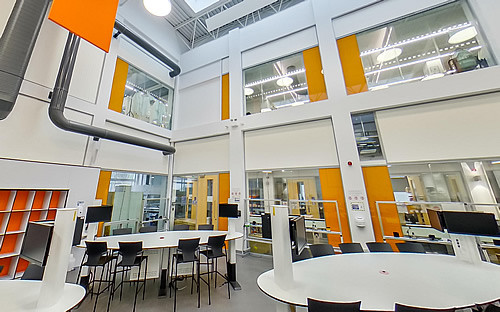
We have recently invested £30M in major new teaching laboratories to provide state-of-the-art experimental facilities specifically for teaching.
Opened in 2016 the lab provides a space on the ground floor with step free access and has a height adjustable bench installed for wheelchair users.
Contact: Dr Reshma Tilwani
Whitehead Aeronautical Laboratory
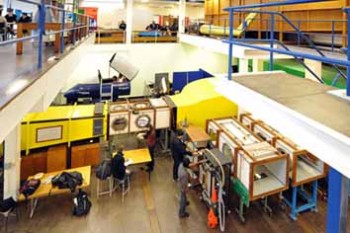
The Whitehead Aeronautical Laboratory.
The Whitehead Aeronautical Laboratory contains a large number of wind tunnels which are being used for teaching, undergraduate projects and research activities. In addition to the wind tunnels themselves these laboratories contain a large variety of flow measurement and visulisation tools including:
- Pressure probes
- Flow Visualisation tools such as smooke, oil and schlieren system
- State of art image processing techniques for obtaining qualitative and quantitative information about the flow field
- Hot-Wire Anemometers for turbulence measurements
- Advanced optical flow diagnostic tools such as Particle Image Velocitemetry (PIV) and Laser Doppler Velocimetry (LDV)
- Direct force and moment measurement using three and six-component balances
- Noise measurement devices.
X-Ray Diffraction Facility
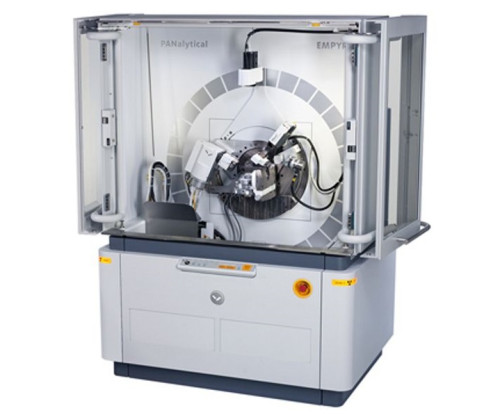
PANalytical Empyrean diffractometer
The X-Ray Diffraction Facility (XDF) offers a full diffraction analysis service in materials science, structural chemistry, structural biology and solid state science. The facility is located in the Francis Bancroft building (room G.30) at the Mile End campus, and is operated by the School of Biological and Behavioural Sciences
Contact: Dr Richard Whiteley
We have some additional virtual tours of various facilities on our SEMS Tours page.